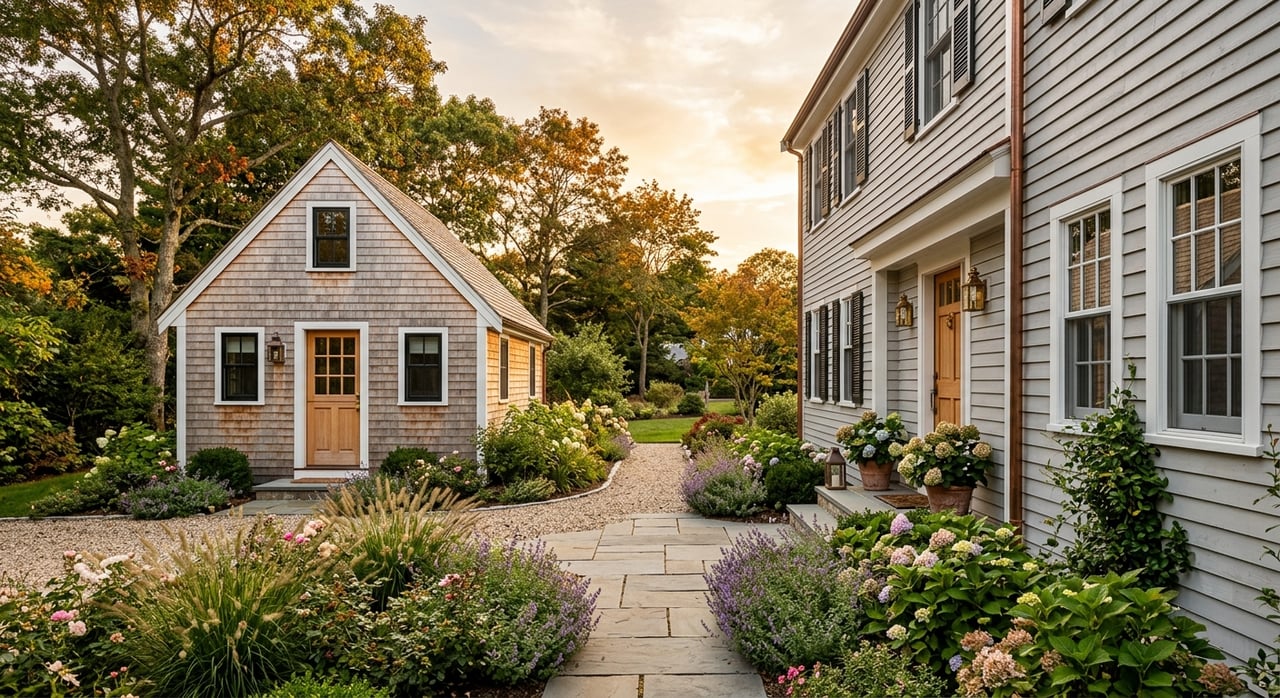
Fairfax County Accessory Dwelling Units: What to Know
April 16, 2026
April 16, 2026
Thinking about adding a separate living space at your Fairfax County home? It can be a smart way to create flexibility for family, a caregiver, or a small long-term rental, but the rules are more specific than many owners expect. If you are exploring this option, it helps to understand what Fairfax County allows, what can trigger extra approvals, and what property details can affect whether your plan is feasible. Let’s dive in.
In Fairfax County, this housing type is called an accessory living unit, or ALU, not an ADU. According to the county’s ALU FAQs, the term ADU is used locally for affordable dwelling units, while an ALU is a subordinate unit connected to a single-family detached home.
That distinction matters because only single-family detached dwellings qualify for an ALU in Fairfax County. Townhouses and condominiums do not qualify under the county’s current rules.
In practical terms, Fairfax County’s standards make ALUs best suited for multigenerational living, caregiver housing, or a very small long-term rental setup. The county’s owner-occupancy requirement, two-person occupancy cap, and ban on short-term lodging all shape how these units can be used.
If you are picturing a flexible suite for a parent, adult child, or live-in caregiver, an ALU may fit well. If you are thinking about a short-term rental or a larger income-producing unit, the county’s rules are much more limiting.
If the ALU is inside the main house, it may be approved through an administrative permit if it meets the county’s standards. Fairfax County explains this process on its ALU overview page.
This change came with the county’s modernized zoning ordinance, which took effect July 1, 2021. As noted in the county’s zoning modernization update, the ordinance removed the prior age or disability requirement and made it easier for qualifying interior ALUs to move through an administrative review instead of a special permit process.
If the ALU is a detached structure, the process is more restrictive. Detached ALUs require a special permit from the Board of Zoning Appeals and are allowed only on lots of at least 2 acres.
Fairfax County also allows only one ALU per single-family lot. So if you are evaluating a property for this use, lot size and existing improvements matter right away.
Interior ALUs are generally limited to 800 square feet or 40% of the home’s gross floor area, whichever is less. The county also allows use of the entire basement or cellar up to the size that existed on July 1, 2021.
For many owners, this is the first major design checkpoint. A lower level conversion may work, but the exact existing layout of your home can determine what is realistic.
An interior ALU must be wholly within the principal dwelling. It also must connect through an interior space that is finished, temperature controlled, and fully enclosed.
If you plan to add a separate entrance, Fairfax County says any new exterior entrance must be on the side or rear of the home. That can affect both design and permit planning.
Detached ALUs are limited to 1,200 square feet. Even when lot size qualifies, setbacks, easements, and other site conditions can still affect whether a detached option is workable.
One of the biggest rules to understand is owner occupancy. Fairfax County requires that either the ALU or the principal dwelling must be owner-occupied.
The ALU itself may house no more than two people and contain no more than two bedrooms. The main house must also continue to comply with the county’s general occupancy limits for single-family dwellings.
These standards are a big reason ALUs in Fairfax County are usually a lifestyle or household-flexibility solution, not a large-scale rental play.
Parking is another issue that can affect feasibility early. A home with an ALU must provide the parking required for the main dwelling plus one additional space.
County application materials also call for three off-street spaces if the home is on a public street and four off-street spaces if it is on a private street. For special permit cases, the Board of Zoning Appeals may modify parking requirements, but you should not assume that will happen.
If you need a new garage or carport, Fairfax County says it must be directly adjacent to an existing garage or carport and use the same driveway and curb cut as the main dwelling. That can limit redesign options on tighter lots.
ALUs must meet all applicable building, health, safety, and sanitation rules. If your property uses a well or septic system, Fairfax County requires Health Department approval before the ALU permit can be approved.
The county also notes that ALU construction is not treated as a subdivision of the lot, and inspections may occur during reasonable hours. If a building permit is needed, the ALU permit can be held until the related permit receives final inspection.
For timing and cost, Fairfax County says applications are submitted through PLUS, may take about 30 calendar days to process, and currently cost $270, with $95 for renewal.
Administrative permits are issued for an initial two-year period and may be extended for up to five years based on compliance. That means approval is not simply a one-time box to check and forget.
Fairfax County also states that if the required standards are no longer being met, the unit may not continue to be occupied as a separate dwelling. The county notes that kitchen facilities do not have to be removed, but legal occupancy as a separate unit can end if compliance slips.
This point is simple but important. Fairfax County specifically prohibits ALUs from being used for short-term lodging.
If your goal is Airbnb-style use, an ALU is not the right vehicle under the current county rules. These units are meant for longer-term residential use within a tightly regulated framework.
Even when an ALU seems possible on paper, the real answer is often property-specific. Fairfax County makes that clear, and in our experience, this is where careful up-front research can save time and money.
Start by confirming the property’s zoning district through the county’s zoning district tools and address search resources. Fairfax County notes that allowed uses and setbacks vary by district and may also be affected by proffers, development conditions, or development plans.
Next, review the plat or house-location plat through the county’s zoning property file guidance and FAQs. Easements cannot be encroached upon, and floodplain or flood-zone conditions can affect your ability to build or expand.
It is also wise to check for older permits, zoning history, or active cases through the county’s public land development records systems. These records can reveal earlier approvals, unresolved issues, or property history that may affect your next steps.
County staff are clear that private restrictions are separate from zoning. HOA rules or deed restrictions may be more restrictive than county rules, so you will want to review those independently before making plans.
If you own a single-family detached home in Fairfax County, an ALU can create useful flexibility, but it is not a one-size-fits-all option. The most important factors are usually the home’s existing layout, lot size, parking, recorded restrictions, and your ability to meet the county’s occupancy and owner-occupancy rules.
If you are buying with the goal of adding an ALU, it is smart to evaluate these issues before you close, not after. A property that looks promising online may run into practical limits once zoning, parking, easements, or permit history are reviewed.
If you want help evaluating a Fairfax County property and how local rules may affect its real estate potential, Taylor J Barnes can help you think through the property, the location, and the questions worth answering before you make a move.
Stay up to date on the latest real estate trends.


Get assistance in determining current property value, crafting a competitive offer, writing and negotiating a contract, and much more. Contact me today.