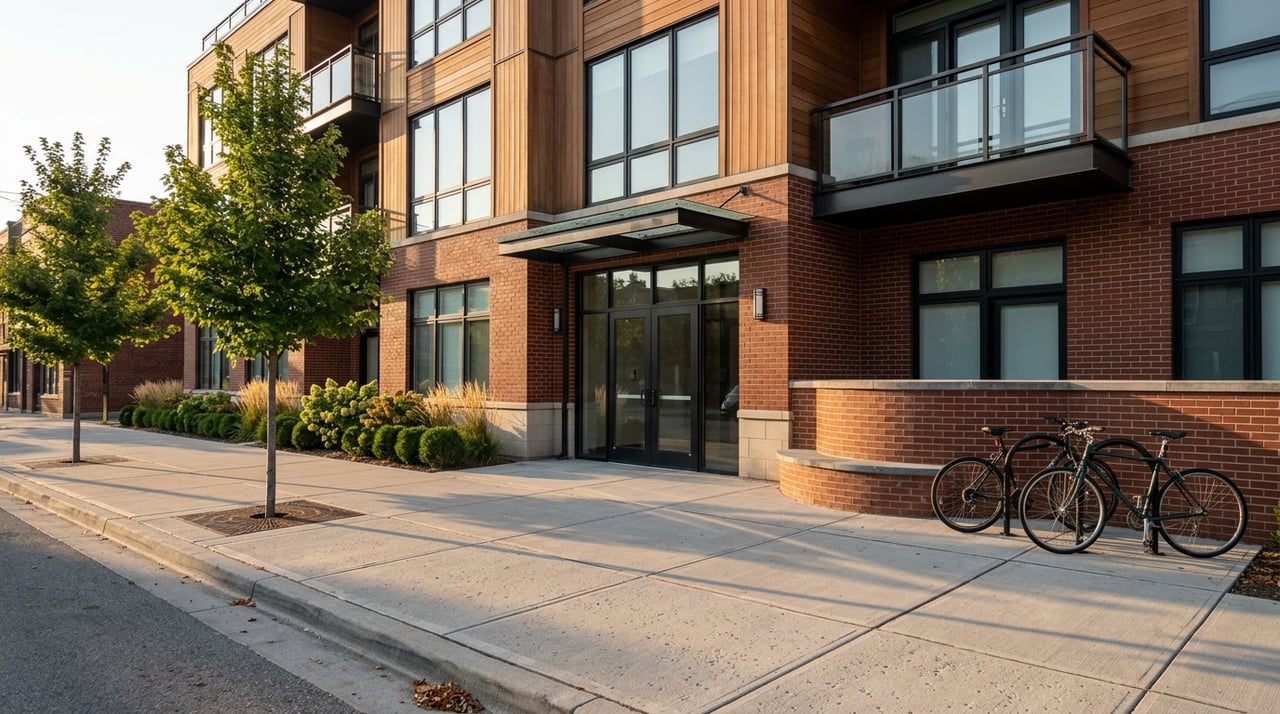
Arlington Metro Corridor Living for a Car-Light Lifestyle
July 2, 2026
July 2, 2026
If you want a lifestyle with fewer car trips and more freedom in your daily routine, Arlington is one of the clearest places in Northern Virginia to look. You may be weighing convenience, housing options, commute patterns, and whether day-to-day errands can really happen on foot. The good news is that Arlington’s Metro corridors were built for exactly that kind of practical, car-light living. Let’s dive in.
Arlington’s car-light pattern is not random. The county’s planning model concentrates the highest density within about a quarter mile of Metro station entrances, especially along the Rosslyn-Ballston corridor. That creates compact station areas where housing, shops, offices, and public spaces sit close together instead of being spread across large detached-home grids.
This approach has scale behind it. Arlington describes the Rosslyn-Ballston corridor as part of seven mixed-use, walkable, bicycle-friendly Metro transit villages with more than 47,000 residential units, 36 million square feet of office space, and 6 million square feet of retail. In simple terms, that means a lot of the places you need to go are already built into the neighborhoods around the stations.
The county’s housing growth also supports this lifestyle. Arlington’s 2026 County Profile says 99% of net housing growth since 2020 came from multifamily apartments and condos. That matters because these home types often line up well with people who want shorter walks, easier maintenance, and quick access to transit and nearby services.
Arlington’s best-known car-light areas cluster around Metro stations. Each one has its own feel, but they all share the same basic advantage: you can do more close to home and rely less on a car for everyday trips.
The Rosslyn-Ballston corridor includes Rosslyn, Courthouse, Clarendon, Virginia Square, and Ballston. Arlington has planned these station areas as dense, mixed-use centers where homes, retail, offices, and public amenities sit within walking distance of Metro. If you are searching for a place where transit is part of daily life, this corridor is the county’s clearest example.
Rosslyn is the most skyline-driven station area in the group. Arlington describes it as a district of high-rise apartments and condos, and the county’s planning language emphasizes its walkable public realm with shops, food, arts, and public spaces. If you want the strongest urban feel in Arlington, Rosslyn is often the benchmark.
Courthouse blends civic uses, offices, retail, theaters, and large residential communities around a central plaza. It tends to appeal to people who want a busy, connected setting without stepping quite as far into the high-rise identity of Rosslyn. The layout makes it easier to picture a routine where errands, dining, and transit all stay close together.
Clarendon is one of the county’s best-known walkable neighborhoods. Arlington and WMATA describe it as a place with shops, restaurants, entertainment, public art, and tree-lined streets along Wilson Boulevard. For many buyers and renters, Clarendon represents a practical middle ground between urban energy and neighborhood comfort.
Virginia Square is the strongest example of a more residential station area in this corridor. County planning describes it as predominantly residential, with cultural, educational, and recreational amenities. If your goal is to stay near Metro while leaning toward a quieter residential rhythm, Virginia Square may stand out.
Ballston functions as a major transportation hub with residential buildings, offices, hotels, restaurants, shops, and open spaces. WMATA notes its downtown feel, and Arlington frames it as a station area with a wide mix of activity. If you like the idea of having multiple services and destinations clustered around one station area, Ballston checks many of those boxes.
South Arlington follows a similar transit-oriented model in Crystal City and Pentagon City. County planning describes this corridor as walkable and transit-oriented, with more housing options, improved public spaces, and stronger transit connections. These areas show that car-light living in Arlington is not limited to the Orange and Silver Line spine.
Crystal City is known for easy access to Metro, underground shops, Restaurant Row, and convenient reach to the Pentagon and Ronald Reagan Washington National Airport. For some households, that mix creates a very functional daily setup, especially if work trips or regional travel are part of life. It is a corridor built around movement and convenience.
Pentagon City is framed by Arlington as a shopping and dining destination with a wide mix of housing types. WMATA also highlights its location inside the Beltway and proximity to Virginia Highlands Park, along with bikesharing access at the station. That combination can be attractive if you want transit, nearby retail, and another option for the last leg of your trip.
For most people, the real question is not whether a neighborhood is “walkable” in theory. It is whether you can handle weekday routines without feeling like every errand turns into a car trip. In Arlington’s Metro corridors, many of those routines can happen within a short walk from home, with Metro used for longer trips.
WMATA describes Clarendon as providing easy access to shopping and entertainment, Courthouse as centered on a civic and commercial plaza, and Ballston as having a downtown feel with retail and restaurants. Crystal City adds underground shops and Restaurant Row, while Pentagon City brings shopping and dining into the mix. Those details matter because they show how station areas are set up for practical, repeated use.
That does not mean every household will go fully car-free. Regional errands, special trips, and personal preferences still matter. But Arlington’s own transit program is designed to support mobility without requiring you to own or operate a personal car, which makes occasional car use more realistic than daily dependence.
Transit is the backbone of Arlington’s car-light lifestyle. Rosslyn is the first stop in Virginia for the Orange, Silver, and Blue lines, while Clarendon, Virginia Square, and Ballston sit on the Rosslyn-Ballston Orange and Silver spine. Crystal City and Pentagon City serve the Blue and Yellow side of the system, giving you multiple corridor options depending on where you live and where you need to go.
Arlington Transit, or ART, adds another layer. The county says ART buses connect neighborhoods to Metrorail and VRE and serve residents, commuters, and visitors who want mobility without owning a personal car. That is important because even in a transit-rich area, the connection between home and station can shape how easy your routine feels.
Work patterns also help explain why the model holds up. Arlington’s County Profile says 35% of residents age 16 and over work from home, and the Census Bureau lists the mean travel time to work at 26.2 minutes. If your household has hybrid work or shorter commute patterns, living near a station can reduce the number of days when a car feels necessary.
A car-light lifestyle works better when Metro is not your only option. In Arlington, bike and trail infrastructure help fill the gaps between home, transit, work, and errands. That flexibility is a big reason these station areas feel practical rather than limiting.
BikeArlington supports trail construction, trail renovations, bike-lane expansion, bike parking, and wayfinding across the county. In Crystal City, the bike network includes protected or buffered lanes on Crystal Drive and Clark and Bell Streets, with cross-street connections that improve local circulation. Arlington is also planning the Long Bridge Drive multimodal connection as a major walking and biking route between Arlington and DC.
Pentagon City station also includes bikesharing access, according to WMATA. For you, that can mean one more option for short trips or the last mile between transit and your destination. When walking, biking, Metro, and buses all overlap, your day-to-day choices widen in a helpful way.
The best Arlington station area for you depends on what “car-light” means in your actual routine. Some people want the most urban environment possible, while others want Metro access with a more residential setting. Arlington offers both.
If you want the strongest urban-core feel, Rosslyn, Clarendon, Ballston, Crystal City, and Pentagon City are the clearest examples. These areas combine high-rise or mid-rise housing, mixed-use blocks, and substantial retail or office activity. They are often the easiest places to picture living with fewer car trips built into your week.
If you want a more residential station-area feel, Virginia Square stands out most clearly. Courthouse and Ballston also blend residential life with civic or commercial activity, which may appeal if you want balance rather than intensity. The right fit often comes down to how you prioritize quiet, convenience, housing style, and your usual trip patterns.
Housing type is part of that decision too. Arlington’s recent growth has been overwhelmingly in multifamily apartments and condos, and many station areas are oriented around those options. If you are deciding between buying, renting, or making a move within the county, it helps to think beyond price alone and focus on how the location will shape your everyday routine.
Before choosing a home along Arlington’s Metro corridors, try to map your week honestly. Think about where you work, how often you commute, where you shop, how you like to spend free time, and how comfortable you are mixing walking, transit, and biking. A neighborhood can look great on paper but still feel wrong if your daily pattern does not match the corridor.
It also helps to compare station areas in person. Rosslyn may feel more vertical and fast-paced, while Virginia Square may feel more residential. Clarendon, Courthouse, Ballston, Crystal City, and Pentagon City each offer a different mix of transit access, public spaces, retail, and housing types.
The goal is not to force a car-free lifestyle if that does not suit you. It is to find a location where your car becomes optional more often, which can save time and simplify your week. If that is your priority, Arlington gives you several credible options.
If you are comparing Arlington neighborhoods, condos, rentals, or transit-oriented opportunities in Northern Virginia, Taylor J Barnes can help you match the right corridor to your goals with practical, local guidance.
Stay up to date on the latest real estate trends.


Get assistance in determining current property value, crafting a competitive offer, writing and negotiating a contract, and much more. Contact me today.