Fairfax County Neighborhoods Guide for Your Lifestyle
June 18, 2026
June 18, 2026
Wondering which Fairfax County neighborhood actually fits the way you live, not just what looks good on a map? That is a smart question, because this county offers more than 60 communities, and the day-to-day feel can change a lot from one area to the next. If you are weighing transit access, housing style, neighborhood setting, or a little of everything, this guide will help you sort through the options with a practical local lens. Let’s dive in.
Fairfax County’s own planning framework is a helpful place to start because it looks at communities by how they function. The county groups areas into urban centers, suburban centers, community business centers, and transit station areas.
That matters when you are choosing where to live. Instead of chasing rankings, you can focus on what your week really looks like, such as commuting, errands, housing type, and how much activity you want around you.
If you want a daily routine built around rail, bus service, and mixed-use living, a few Fairfax County areas stand out. These places are the strongest fit for buyers and renters who prefer condos, apartments, or newer buildings near shops and transit.
Tysons is the county’s clearest urbanizing area. Fairfax County calls it the county’s downtown, and it is served by four Silver Line stations.
The county’s land-use plan emphasizes transit-station mixed use, residential development in transit-oriented districts, and high-quality urban environments within a quarter mile of stations. In real life, that often means a more walkable, vertical, and connected routine than you will find in more traditional suburban neighborhoods.
Reston offers a transit-oriented lifestyle with a different feel from Tysons. The county describes Reston as a complete community with diverse housing options, multimodal transportation, and a mix of housing near jobs and community amenities.
That balance makes Reston appealing if you want transit access without committing fully to a dense urban setting. It blends urban and suburban parts of the area, which can give you more flexibility in how you want to live.
Merrifield centers around the Dunn Loring-Merrifield station and has a strong mixed-use character. County planning identifies office, medical, hotel, residential, light industrial, and retail uses in the area, along with major destinations like the Mosaic District and Fairview Park.
If you want a suburban setting with a more active commercial core, Merrifield can be a practical middle ground. It tends to work well for people who want everyday convenience and transit access in the same place.
Springfield is another solid option for transit-connected suburban living. It is a special planning area, and the county added a new Springfield commuter garage in 2024 to help connect drivers to transit.
The area’s commute options include the Blue Line, VRE access, Fairfax Connector service, and park-and-ride choices. If your routine depends on combining driving, rail, and bus service, Springfield offers more than one way to get where you need to go.
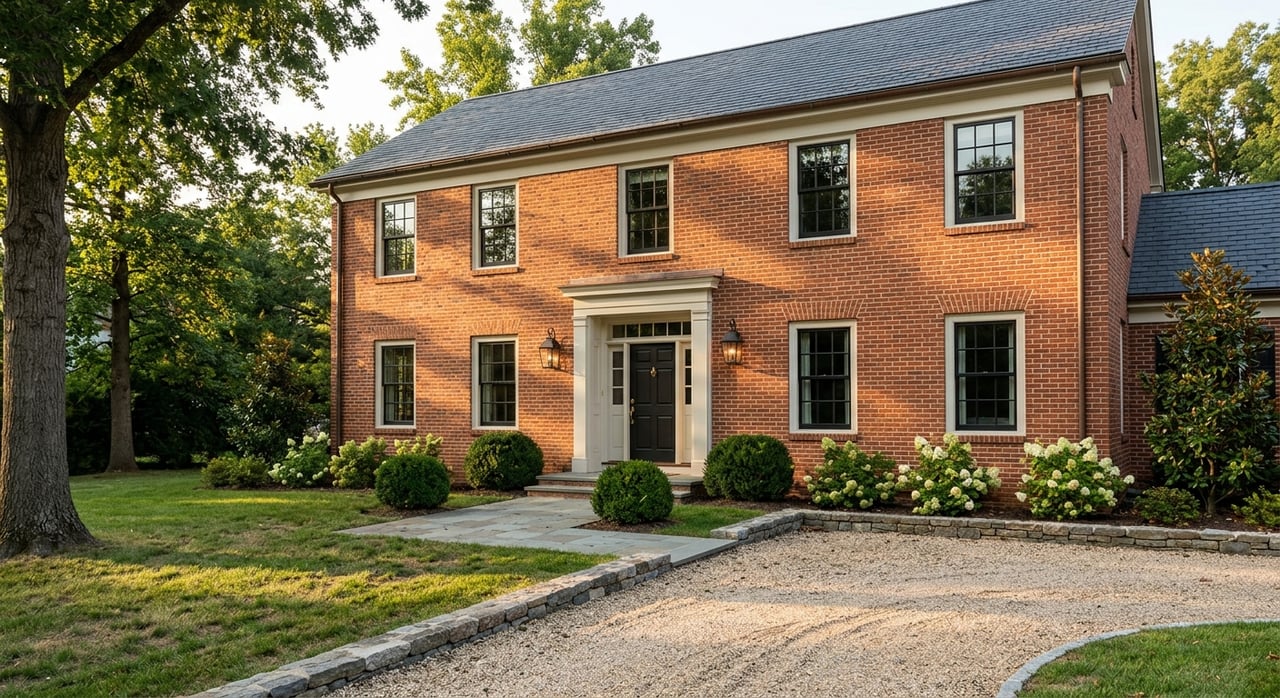
If you want established streets, more traditional housing forms, and local shopping without the intensity of major redevelopment, Fairfax County has several neighborhoods that fit that pattern well. These areas often balance residential character with useful access to transit or commercial centers.
Vienna sits in a useful middle ground between classic suburb and transit-accessible corridor. County planning describes the district as predominantly residential, with single-family detached and attached homes, while higher-density housing is concentrated along Route 29 and Route 50.
Vienna also has the Vienna-Fairfax-GMU Metro station and the W&OD Trail. For many buyers, that mix creates a practical blend of neighborhood feel and regional access.
Annandale is a classic inner-suburban choice with a strong everyday commercial presence. The county says the district is developed primarily with single-family detached housing, with garden-style apartments and condominiums near the Annandale community business center.
That business center is oriented to Little River Turnpike and Columbia Pike and serves as a community focal point. If you want an established residential setting with nearby services and activity, Annandale is worth a close look.
Burke shows the more spacious side of suburban Fairfax County. The current plan describes extensive parkland and notes that much of the sector is developed with single-family detached houses and townhouses.
For buyers who want a lower-density feel and access to open space, Burke can offer a different pace from the county’s more urbanizing corridors. It is often a good match when yard space and a quieter setting matter more than being near rail.
McLean offers a suburban environment with a village-like commercial core. County planning says the community business center should retain community-serving retail and support office, retail, and residential uses at a pedestrian-oriented scale.
The plan also emphasizes preserving nearby neighborhood stability and improving access to West Falls Church Metro. For some buyers, that combination creates an appealing balance between convenience and a more traditional neighborhood setting.
Not every move is about getting closer to a station or a mixed-use district. Some buyers want more privacy, larger lots, and a landscape-driven setting, even if that means a longer trip for certain errands or commutes.
Great Falls is one of the county’s clearest examples of a semi-rural setting. The Upper Potomac Planning District includes large undeveloped land, estates, farms, and large-lot subdivisions, with county planning emphasizing the protection of streams and other natural resources.
That makes Great Falls a strong fit if space and privacy are high on your list. The tradeoff is that this type of setting is not built around walk-to-rail convenience.
Clifton stands out for its historic village character. County planning describes it as a stable incorporated town with historic single-family dwellings and a small group of local commercial uses on Main Street and Chapel Road.
If you are drawn to a smaller-scale setting with a distinct sense of place, Clifton offers something different from both the county’s urban centers and its broader suburban neighborhoods. It is more about character and setting than high-density convenience.
Once you narrow your list, it helps to compare neighborhoods through a few lifestyle filters. Fairfax County’s community profiles organize data by housing units by type and average commute, which makes it easier to evaluate places on a practical level.
Here are a few questions to ask yourself before you make a decision:
A lifestyle match often comes down to tradeoffs. The best neighborhood for you is usually the one that supports your routine, not the one that checks the most boxes on paper.
In Fairfax County, commuting convenience is not only about living next to a station. The county’s transportation network includes the Silver, Orange, Yellow, and Blue Metro lines, along with the Fredericksburg and Manassas VRE lines.
Fairfax Connector is also the largest local bus system in Northern Virginia, carrying about 33,000 passengers on 90 routes daily. Add in nearly 30 free park-and-ride lots, commuter garages in Fairfax and Springfield, and paid Metro parking at stations like Vienna-Fairfax-GMU and Wiehle-Reston East, and you can see why access patterns matter as much as straight-line distance.
That is one reason two neighborhoods with similar map locations can feel very different in daily life. A home that plugs into bus, rail, and park-and-ride options may fit your schedule better than one that appears closer to work but has fewer commute choices.
If you want the short version, Fairfax County neighborhoods can be grouped in a practical way. This is not a ranking, but it is a useful starting point based on the county’s planning descriptions.
| Lifestyle priority | Neighborhoods to explore |
|---|---|
| Transit-first living | Tysons, Reston, Merrifield, Springfield |
| Classic suburban balance | Vienna, Annandale, Burke, McLean |
| Space and quieter settings | Great Falls, Clifton |
This kind of first-pass sorting can save you time. Once you know which category fits your lifestyle, you can focus your home search more confidently.
If you are planning a move in Fairfax County, neighborhood fit deserves as much attention as price and square footage. The right choice is the one that supports how you live now and where you want to be a few years from today. For thoughtful, neighborhood-level guidance across Northern Virginia, connect with Taylor J Barnes.
Stay up to date on the latest real estate trends.


Get assistance in determining current property value, crafting a competitive offer, writing and negotiating a contract, and much more. Contact me today.